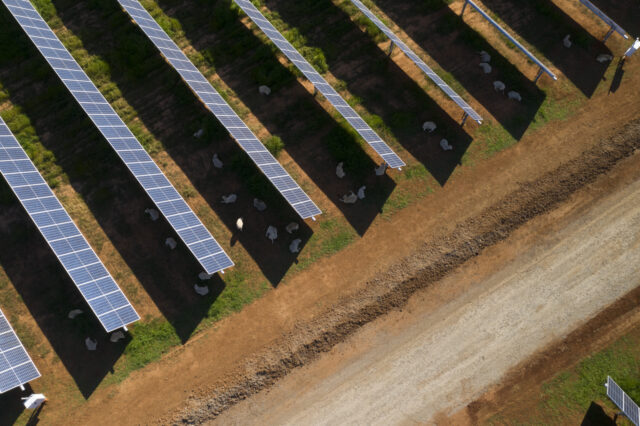
The PV solar panels comprising a solar farm absorb the energy from the sun and convert it into electricity.
When light shines on a solar panel, the light’s photons knock electrons free from the material within the solar panel, producing electricity. An inverter transforms the electricity generated from the solar panels from direct current (DC) electricity to alternating current (AC) electricity. This AC electricity is transmitted to a substation through medium voltage underground cables where it is distributed to the grid via a transmission line (either new line or by connecting into existing lines).
Large-scale solar farms use similar technology to that used in residential solar photovoltaic installations, with the main difference being that solar farm panels are usually mounted on systems that track the sun through the sky. The amount of energy generated is determined by the intensity and angle of the light hitting the solar panels. This is why the solar farm uses a tracking system to optimise the angle of the panel to the sun throughout the day.
A solar farm consists of a large-scale solar photovoltaic (PV) generation facility, and associated infrastructure. It comprises the installation of solar PV panels, substation, inverters, power cabling, site offices and access tracks. A transmission line to connect the solar farm to existing electrical infrastructure may be required.
The solar panels are typically 1.2 meters (m) x 2.4 m in size and are arranged in rows. These rows of solar panels are spaced 5m to 7m apart. The height of a fully tilted solar panel is 3m to 4m above the ground.
BESS facilities generally use lithium-ion to store the electricity until it is ready to be distributed to the network. BESS facilities allow energy generated from another source (such as a solar farm) to be stored until it is needed. BESS facilities improve grid reliability by storing low-cost electricity when there is an oversupply of electricity or during periods of low demand/high generation so that electricity is available when demand is higher. In fact, BESS can reduce electricity costs for communities by lowering peak demand charges and providing access to cheaper electricity during off-peak hours. The fast response capability of BESS also offers ancillary services to keep power quality in the grid at a standard level. Additionally, BESS can act as a backup power source during emergencies like bushfires, ensuring that critical infrastructure (hospitals, emergency services, water systems) remains operational even if the grid is disrupted.
BESS facilities contain several key components, including battery units, inverters and transformers. The final composition of a BESS facility will depend on the BESS technology being used, the BESS supplier and the size of the facility. Where possible, BESS facilities are co-located with or near a grid connection point (such as a terminal station), therefore minimising the need for additional connection infrastructure.
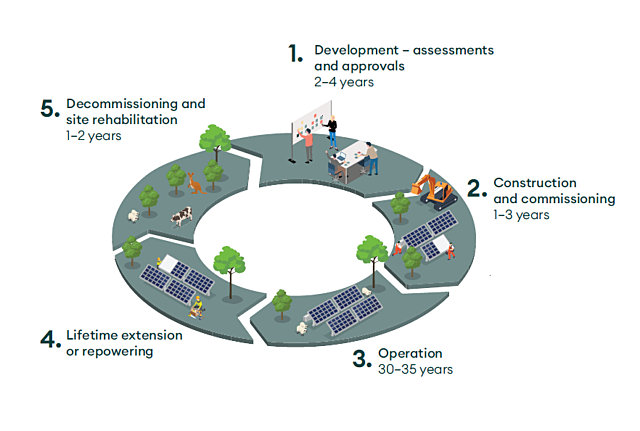
Large-scale BESS facilities are expected to have an operational life of approximately 15 to 20 years and are typically monitored remotely, without the requirement for permanent staff on site. Staff are, however, required to access the site from time to time to undertake inspection and maintenance activities.
A solar farm design evolves over time and is continuously refined as more information becomes available. Information is fed into the design as it emerges from site investigations, environmental assessments, community feedback and planning permit requirements. We consider a range of aspects, including:
We develop and operate projects within onshore and offshore wind power, solar power, and energy storage. With our extensive experience, strong market position and efficient business model, we are powering the great shift towards a sustainable society, and we are well equipped to further strengthen our position in a growing market. We are present across Europe and in Australia.
We design and build sustainable projects and tailor them to meet our customers’ needs. OX2 has a proven business model and in-house expertise at every step of the process – from project inception and financing to engineering and design, permitting, procurement, construction, and technical and commercial management.
Our mission is to accelerate access to renewable energy. We see ourselves becoming the leading provider of renewable energy solutions globally, thereby powering the great shift.
As signatories to the Clean Energy Council’s Best Practice Charter, OX2 is dedicated to meaningful, transparent and respectful engagement with the regional communities where we operate. We focus on building enduring relationships, recognising and upholding environmental and cultural values and contributing to positive long-term value for local residents, Traditional Custodians and stakeholders.
If required, landscape screening can be a measure taken to reduce the visual impact. Vegetation can be planted to screen the view of the solar farm from viewpoints. Vegetation screening may be able to be planted on the perimeter of the site should the footprint and fire risk considerations allow. Off-site landscape screening may sometimes be required by authorities, particularly where visual impacts cannot be mitigated on site.